


Smarter Assessments and Earlier Identification
Traditional evaluations rely on standardized assessments, clinical observations, caregiver reports, and professional judgment. These remain the foundation of quality assessment, but they represent only a snapshot of an individual's communication abilities.
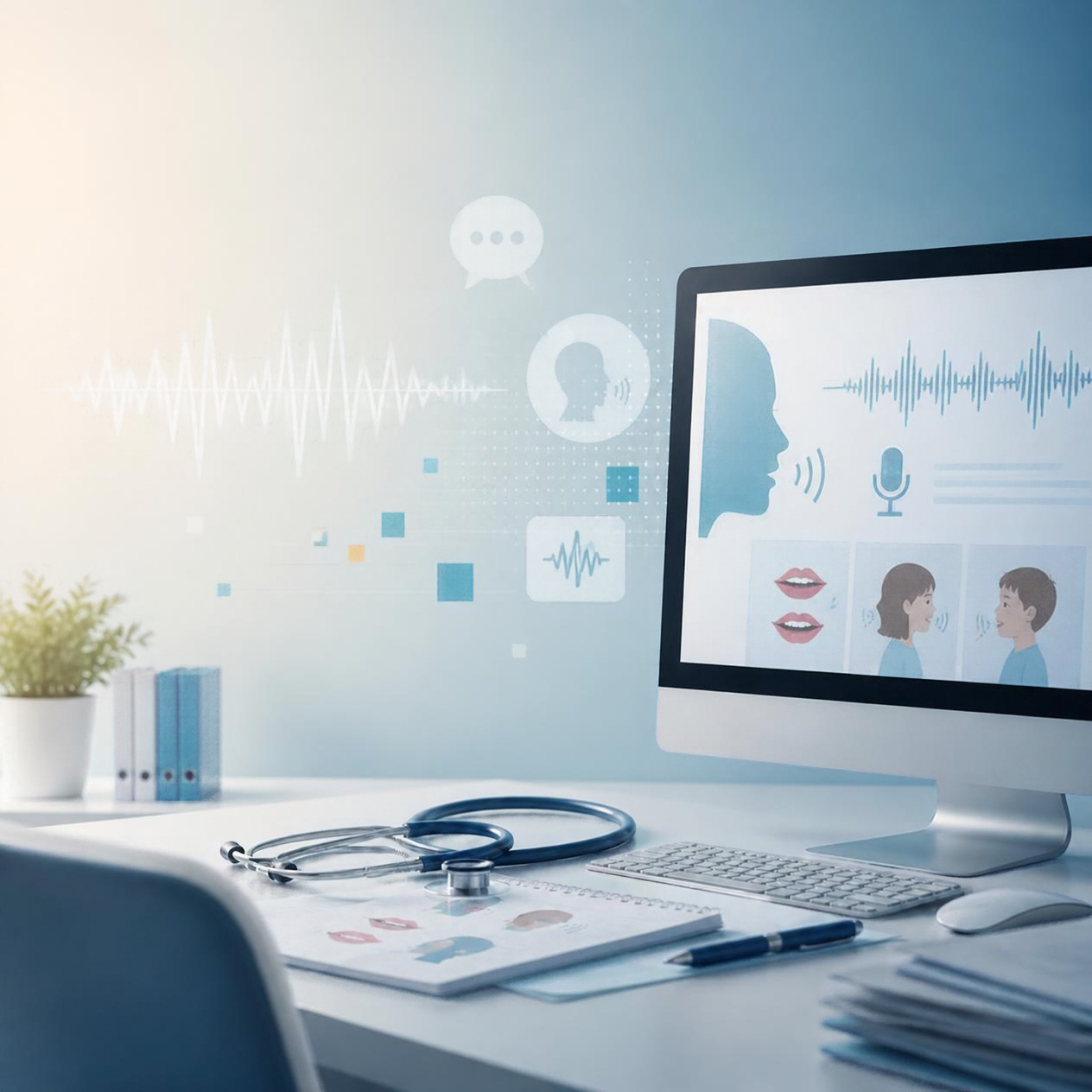
Artificial Intelligence has the potential to analyze larger amounts of speech, language, cognitive, and hearing data with remarkable speed and consistency. As these technologies continue to evolve, AI may assist clinicians by identifying subtle patterns that could otherwise be difficult to detect during a single evaluation.
Speech samples can be analyzed for articulation errors, intelligibility, fluency patterns, language complexity, voice characteristics, and communication trends. In audiology, AI can assist with interpreting hearing assessments, identifying early indicators of hearing loss, predicting hearing aid outcomes, and supporting more personalized treatment recommendations.
Rather than replacing clinical judgment, AI provides clinicians with additional information that can lead to earlier identification and more informed decision-making.
Therapy That Adapts to Every Individual
Every client learns differently. One of the greatest opportunities AI offers is the ability to personalize therapy in ways that were previously difficult or time-consuming.
Future therapy platforms will be able to adjust activity difficulty based on a client's performance, attention, and learning pace. Exercises may automatically increase in complexity when a client demonstrates mastery or provides additional support when extra practice is needed.
This level of personalization can benefit individuals receiving intervention for articulation, language, fluency, voice, cognition, aphasia, auditory rehabilitation, and many other communication disorders.
Instead of spending valuable treatment time manually tracking every response or searching for appropriate materials, clinicians can devote more attention to teaching, coaching, motivating, and modifying treatment based on their professional expertise.
Continuous Progress Monitoring
One of the ongoing challenges in rehabilitation is measuring meaningful progress over time.
AI can support continuous data collection, allowing clinicians to monitor communication performance across therapy sessions, home practice, and functional environments. Rather than relying solely on periodic progress reports, therapists may have access to ongoing trends that help determine whether intervention is producing the desired outcomes.
For audiologists, AI can monitor hearing aid performance, listening environments, and device usage, allowing for more proactive adjustments and improved patient outcomes.
Continuous monitoring provides valuable information for treatment planning, educational programming, insurance documentation, and discharge decisions while giving families a clearer picture of progress.
Expanding Access to Quality Care
Across the country, many schools, hospitals, rehabilitation centers, and private practices continue to face shortages of qualified Speech-Language Pathologists and Audiologists.
AI-supported technology has the potential to help bridge these gaps by expanding access to high-quality services.
Telepractice platforms, guided home programs, caregiver coaching, remote monitoring, and intelligent therapy tools can help clinicians reach more individuals while maintaining continuity of care. This is particularly important for rural communities, medically underserved populations, and adults requiring long-term rehabilitation following stroke, traumatic brain injury, or progressive neurological disorders.
Technology should never replace the clinician, but it can extend the clinician's reach.
Reducing Administrative Burden
Documentation is one of the largest contributors to clinician burnout.
Artificial Intelligence can assist with many of the repetitive administrative tasks that consume valuable clinical time, including drafting SOAP notes, organizing therapy data, summarizing sessions, preparing progress reports, suggesting measurable goals, and assisting with insurance documentation.
These tools should always remain under clinician review, but by reducing time spent on paperwork, therapists can spend more time providing direct patient care, collaborating with families, and developing individualized treatment plans.
The Future of Hearing Healthcare
Artificial Intelligence is also creating exciting opportunities within audiology.
Modern hearing technology continues to become more intelligent, learning from individual listening preferences and adapting automatically to changing environments. AI can support hearing aid optimization, tinnitus management, remote device monitoring, and personalized auditory rehabilitation.
These advances allow audiologists to deliver more precise, individualized care while improving convenience and long-term outcomes for their patients.
AI Should Empower Clinicians, Not Replace Them
At VirtualTx and VTXGames, this philosophy has guided every AI feature we have developed.
We believe that technology should make therapists more efficient, not less essential.
Within the VirtualTx platform, AI is designed to assist clinicians by streamlining documentation, organizing clinical information, generating therapy ideas, helping create individualized goals, summarizing session information, and reducing repetitive administrative work. Every recommendation is intended to support the clinician's expertise, while the therapist remains in complete control of clinical decision-making.
VTXGames applies AI in a similar way. Rather than replacing therapist creativity, AI helps clinicians quickly generate engaging, age-appropriate, and goal-specific therapy activities that can be customized to each client's needs, interests, and abilities. Whether working with a preschooler learning first words, a school-age student improving language skills, or an adult recovering from a stroke, therapists can use AI to create meaningful activities in seconds while maintaining full control over treatment planning.
AI also helps personalize the client experience by adapting activities, tracking progress, and providing meaningful performance data that supports clinical decision-making. The result is more engaging therapy, improved efficiency, and more time for therapists to focus on building relationships, teaching new skills, and supporting meaningful communication.
Technology should never replace the therapeutic relationship. Instead, it should strengthen it by giving clinicians the time and tools to do what only they can do: listen, educate, encourage, problem-solve, and connect with the people they serve.
Ethical Responsibility
As AI becomes more integrated into our profession, it is essential that it be implemented responsibly.
Speech-Language Pathologists and Audiologists must continue to protect patient privacy, safeguard confidential information, recognize potential bias in AI-generated suggestions, and ensure that every clinical decision is based on professional judgment.
Artificial Intelligence should always function as a clinical support tool—not as an independent clinician.
Our expertise, ethics, compassion, and critical thinking remain irreplaceable.
Looking Ahead
The future of Speech-Language Pathology and Audiology is incredibly promising.
Artificial Intelligence will continue to transform assessment, therapy, documentation, hearing healthcare, and access to services. It will automate repetitive tasks, organize information more efficiently, and help clinicians deliver increasingly personalized care.
But the future will never be defined by artificial intelligence alone.
It will be defined by the partnership between innovative technology and skilled professionals who understand that communication is deeply human.
At VirtualTx and VTXGames, we are proud to be part of that future by developing AI that works alongside clinicians, not in place of them. Our mission is to give Speech-Language Pathologists and Audiologists more time to treat, more tools to engage their clients, and more opportunities to improve outcomes through thoughtful, ethical innovation.
The most powerful advancement in communication sciences will never be artificial intelligence by itself.
It will always be human intelligence, compassion, and clinical expertise enhanced by the responsible use of AI.



Leave a Comment
Recent Comments